Chess.com Alternatives in 2026: Free Play, Review, and AI Coaching
If you searched for Chess.com alternatives, start with the job, not the logo. The short list is simple: Lichess is the best free Chess.com alternative for playing more games, Chess.com is still the strongest network, DecodeChess is a one-way written report, and Chessvia is the game-review alternative when you want the mistake explained like a coach.
That is where Chessvia fits: not as another place to replace every Chess.com habit, but as the second tab for the moment after a loss, when a label says "Blunder" and you still do not know why. If your search is really "free chess site," pick Lichess. If it is "why did I lose that game," use a coach-style review.
Pick Lichess when the whole ask is free online chess without ads. Keep Chess.com when your friends, clubs, events, and rating history already sit there. Use Chessvia if the real problem is not finding another board, but understanding why you lost the game you just played.
That split matters. Most "Chess.com alternative" pages pretend every chess site does the same job. They don't. A playing server, a lesson library, an engine analysis board, and an AI coach solve different problems.
Short answer: the best Chess.com alternatives split by job: Lichess for free play, Chess.com itself for the network, DecodeChess for a one-way written report, Noctie when you mainly want a bot opponent, and Chessvia when you want Game Review to explain your mistakes like a coach instead of handing you a canned label.
The best Chess.com alternative depends on the job
People search this page two ways: chess.com alternative when they want one replacement, and chess.com alternatives when they are comparing the short list. The answer is the same either way: choose by the job, not by the logo.
The query is small but sharp: current GSC data for this page shows hundreds of impressions on "chess.com alternatives" and "chess.com alternative" variants, mostly around positions 6-8. That is not a giant traffic keyword. It is a buyer-shaped question from someone already comparing tools.
Some of those searchers want a free place to play. Some want school-unblock workarounds, which is not our reader. The useful slice is the player who likes Chess.com enough to know its strengths, but is tired of the parts that feel thin, paywalled, or too canned.
So start with the job.
| Job | Best fit | Why |
|---|---|---|
| Free online play | Lichess | Unlimited games, no ads, open-source model |
| Full chess network | Chess.com | Ratings, clubs, events, lessons, puzzles, and a huge player pool |
| Explain my mistake | Chessvia | Turns analysis into a coach conversation instead of a canned label |
| Static decoded report | DecodeChess or similar tools | Useful for one-way explanation, less useful when you want to ask follow-up questions |
Chess.com is still the broadest chess network. That is the point. It has the player pool, the clubs, the events, the content engine, and years of habit built into your account. So the honest question is not "which site kills Chess.com?" It is "which second tool solves the job Chess.com does not solve well enough for me?"
But broad is not the same as best for every job. When a tool tries to be the whole chess internet, its learning surfaces can feel mechanical. A Game Review label tells you "Blunder." Fine. Why did it lose? What should you train next? Could you ask a follow-up? That is the gap.
For broader comparisons, the related Chessvia guide to the best chess websites uses this same by-job frame. If the job is specifically post-game review, the best chess analysis site guide compares Lichess, Chess.com, ChessBase, SCID, and Chessvia on that narrower analysis problem. This article is narrower still: what should replace Chess.com for the specific thing you are trying to do tonight?
Use Lichess when you want free play
If the job is free online play, Lichess wins. It is not close.
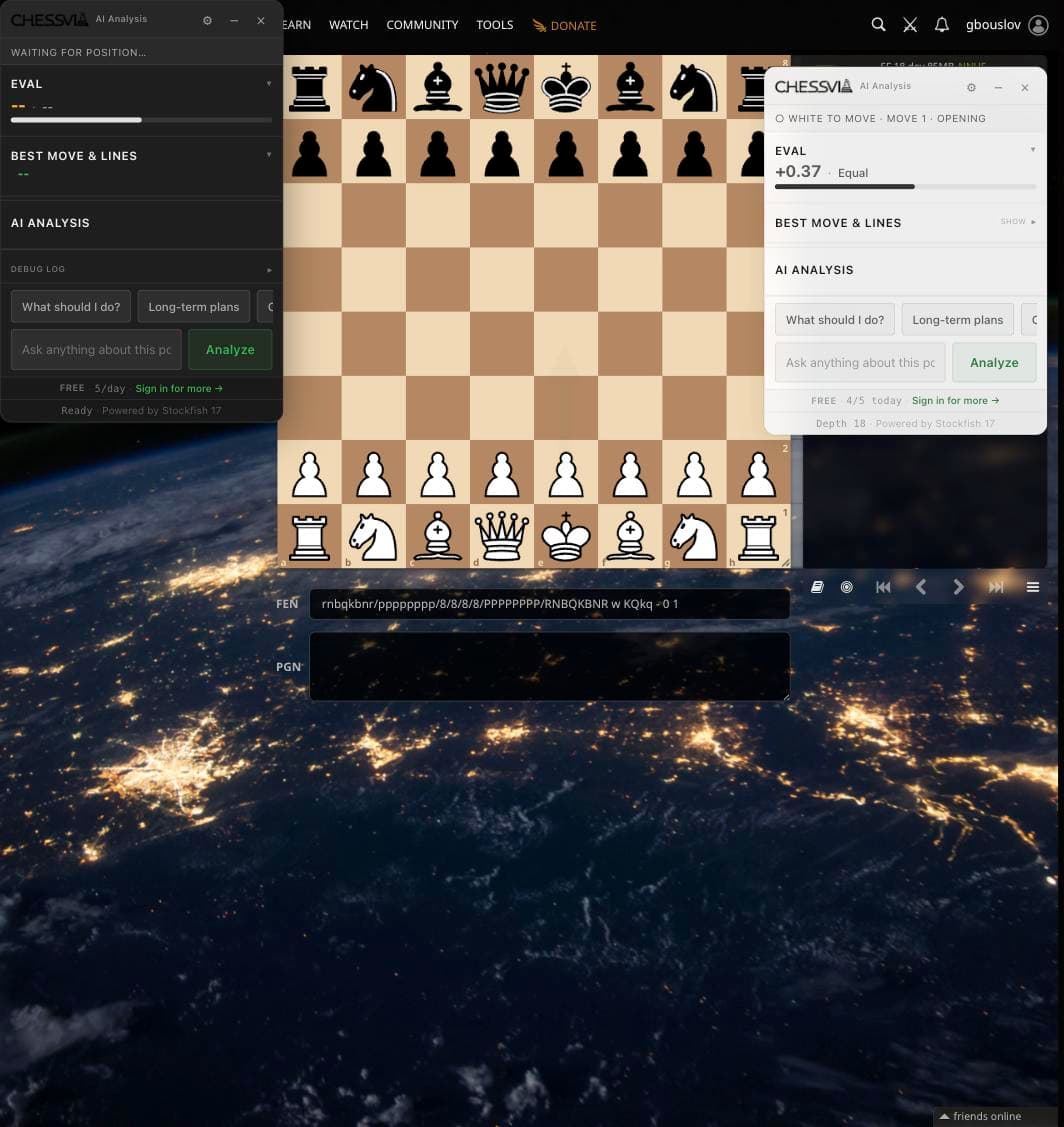
On its about page, Lichess calls itself a "free/libre, open-source chess server" and puts daily play at more than five million games every day. The same page says the site is still 100% free, funded by volunteers and donations instead of ads or selling user data. Checked against: Lichess About.
That is why the boring answer in Reddit threads is usually right. Want unlimited games? Lichess. Want a clean board? Lichess. Want free engine analysis after a game? Lichess. Want to avoid a subscription because you mostly play blitz after work? Lichess again.
That does not make Lichess the best coach. It makes it the best free chess server.
And if your goal is just "I don't want to pay Chess.com," you should probably stop there. Chessvia is not trying to out-Lichess Lichess. That would be silly, and you would feel it immediately.
Use Chess.com when the network matters
Chess.com is hard to replace because the product is not only the board.
Your friends may be there. Your league may be there. Your archive may be there. Your blitz rating may be the number you actually care about, even if you know rating pools differ from site to site. That is real lock-in, but it is also real value.
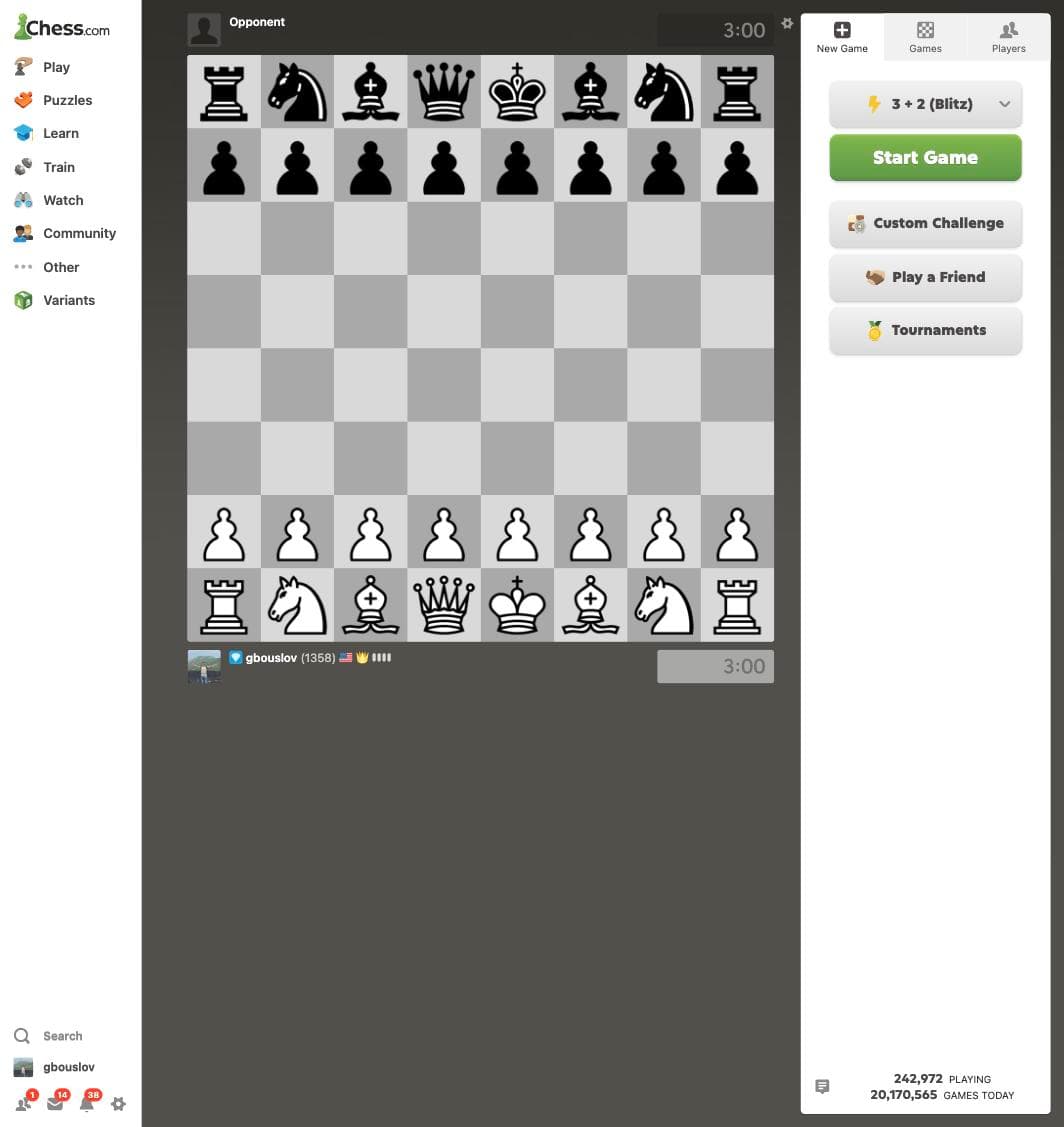
The free tier is not empty either. Chess.com says a free account includes unlimited chess, 3 puzzles per day, and 1 full game review analysis per day. The same Help Center page says Platinum adds unlimited game review and analysis, while Diamond adds coach explanations on all moves. Source: Chess.com Premium Membership Plans.
That is a fair model. Chess.com built a huge chess network, then charges for deeper learning tools. Plenty of players should pay for it.
The weak point is the player who does not want another label. They want a reason.
Use Chessvia when Game Review is the problem
This is where Chessvia belongs in the conversation.
A Chess.com Game Review alternative should not only copy the same workflow with a different logo. If the output is still an eval swing, a name like "Mistake," and a canned sentence, you have not changed much. You have moved the paywall or changed the interface.
Chessvia is built to keep the coach conversation grounded on a real engine, then translate that position into words you can use during your next game.
Chessvia's bet is different: a 1200-1800 improver needs the position explained in human language, then needs to ask one more question. Why was that pawn poison? Why was the rook lift slow? Why did the engine hate the obvious capture?
That is why this article should also link to how to review a Chess.com game for free. That post owns the higher-volume "game review free" query. This one should not steal it. It should point the right reader there.
Here is the kind of moment where a label falls short:
You do not need a dramatic engine number there. You need someone to say: your bishop is loose, c2 is tender, and the knight on d4 is not just a random move. It creates threats you must answer before you play another developing move.
That is the point of a coach-style tool. You paste the position, ask what mattered, and get the idea in words. Then you can ask the follow-up you actually had in your head.
Try that on your own game with Chessvia analysis. Or play a fresh game and ask the coach what changed after the first mistake on Chessvia Play.
What changes after a lost game?
The useful test for any Chess.com alternative is not the home page. It is the ten minutes after you lose.
On Chess.com, you usually get a neat summary. Accuracy. Move labels. A review line. Maybe a coach explanation if your plan includes it. That is tidy, and for many players it is enough.
On Lichess, you get the clean engine board. You can request computer analysis, step through the graph, and check the mistakes without paying. It is direct. It is also a little cold. The board tells you the move changed the position. It does not always tell you why your human brain found the wrong move so tempting.
That temptation is where most improvers live. A 1450 player does not hang a rook because they forgot rooks are valuable. They hang it because the move looked active, or because they saw one threat and missed the reply, or because the previous three moves trained their eye on the wrong side of the board.
Chessvia should win or lose on that moment. Can it explain the mistake in a way you would say back to yourself during the next game? Can you ask, "What was the plan instead?" and get an answer that points to a pattern, not just a move?
That is also why the comparison should stay fair. Chess.com is the better home base for many players. Lichess is the better free board. Chessvia is the better second tab when your real question is, "Why did I think that was fine?"
What about other Chess.com alternatives?
The ranking directory pages point searchers toward the usual list: Lichess, Noctie.ai, DecodeChess, WintrChess, and a pile of smaller tools. AlternativeTo says users have ranked more than 50 alternatives to Chess.com and names Lichess as the best online alternative. Source: AlternativeTo Chess.com alternatives.
That directory read is useful because it shows what the market already understands. Once someone moves past "free place to play," the alternatives are no longer only chess servers. They are training tools and analysis tools.
DecodeChess is a fair example. It can be useful when you want a static explanation of a position. We compare that category more directly in Chessvia vs DecodeChess. Noctie is closer to playing against an adaptive bot, which is why our Noctie alternative guide treats it differently.
Chessvia sits in a narrower lane: coach conversation around your own games. Not a giant chess social network. Not a directory of puzzles. Not another rating pool pretending to be the whole answer.
"A percentile is not a lesson. A blunder label is not a lesson either."
That is the real reason to add Chessvia beside Chess.com or Lichess. You can still play where you like. The learning layer is what changes.
A simple way to choose
Use this rule:
- If you want opponents, ratings, clubs, and social proof, stay on Chess.com.
- If you want free games and free engine analysis, use Lichess.
- If you want a coach-style answer to your own mistake, use Chessvia.
The mistake is trying to crown one site for every player. Picture the mismatch: a 900 chasing puzzle streaks, a 1600 with a weekend tournament PGN, and a coach running a scholastic club. Same board. Different job.
For the 1000-1800 improver, the painful gap is usually not access. You already have too much access. You can play a new game in ten seconds. You can open an engine anywhere. You can watch three videos about the same pawn structure.
The gap is diagnosis.
Why do you keep missing the same bishop tactic? Why does your "active" rook move keep leaving the back rank weak? Why do you trade queens when your attack is the only thing working? If the answer is buried in an eval graph, most players will nod, close the tab, and repeat the mistake two days later.
That is the lane Chessvia is built for. Not more chess. Better feedback on the chess you already played.
My pick: do not replace everything
I would not tell most players to delete Chess.com.
Keep Chess.com when your chess life is already there. Open Lichess for free, clean games or a no-cost analysis board. Bring in Chessvia when neither one gives you the why in a way you can talk back to.
That stack is less dramatic than "the one best Chess.com alternative." It is also how serious improvers actually behave. They play on one site, analyze somewhere else, watch a video, ask a stronger player, then come back to the board.
The difference is that an AI coach can make that loop shorter. No waiting for a forum reply. No guessing which lesson matches the mistake from move 19.
For a broader ranked list, use Best AI Chess Coach in 2026. For the free-play and review angle, go to Lichess Game Review. Then ask the only test I care about: can the tool explain your last mistake clearly enough that you would avoid it next time?
Play and ask the coach whyFAQ
What are the best Chess.com alternatives in 2026?
Lichess is the cleanest Chess.com alternative when all you need is free online play. Noctie is useful if you mainly want a bot opponent. DecodeChess is good for a one-way written report. Chessvia fits a different job: understanding why a move was bad, then asking follow-up questions about your own game.
Is Lichess better than Chess.com?
Pick Lichess for free play, no ads, open-source software, and free analysis. Pick Chess.com for the largest network, events, clubs, lessons, and the familiar rating pool.
What is the best Chess.com Game Review alternative?
Chessvia is built for players who want review to explain why a move was wrong in plain English. Lichess gives free engine analysis. DecodeChess gives a static written explanation. Chessvia turns analysis into a coach-style conversation you can question.
Should I delete Chess.com?
Most players shouldn't. Keep Chess.com if your friends, leagues, and ratings live there. Add Lichess for free play and Chessvia for coached analysis when a label like "Blunder" is not enough.
Compare the best Chess.com alternatives in 2026: Lichess for free play, DecodeChess for reports, and Chessvia when you want game review to explain why.